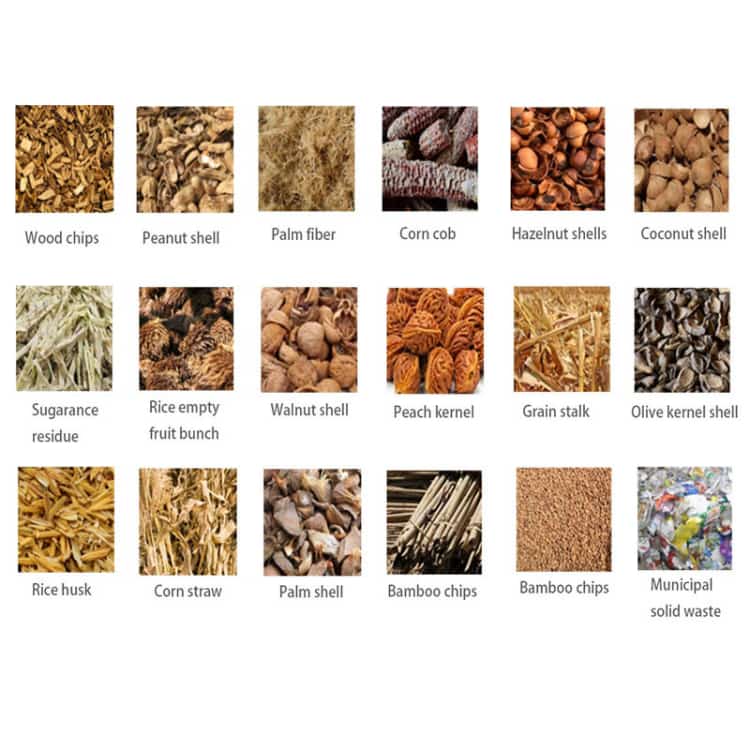


Gas production principle of biomass gasifier:
Biomass gasification is a thermochemical process that converts fuel into combustible gas.During this process, water vapor, free oxygen, or bound oxygen undergo thermochemical reactions with carbon in the fuel to generate combustible gases.The biomass gasification process is relatively complex, and the gasification reaction conditions are also different, but all gasification reaction processes basically include the biomass drying, pyrolysis, oxidation, and reduction reactions.
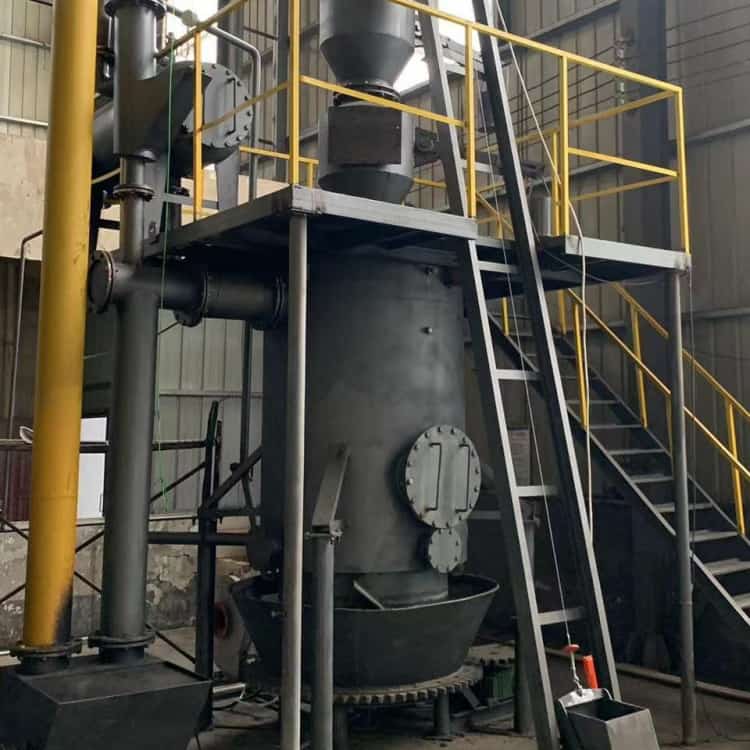
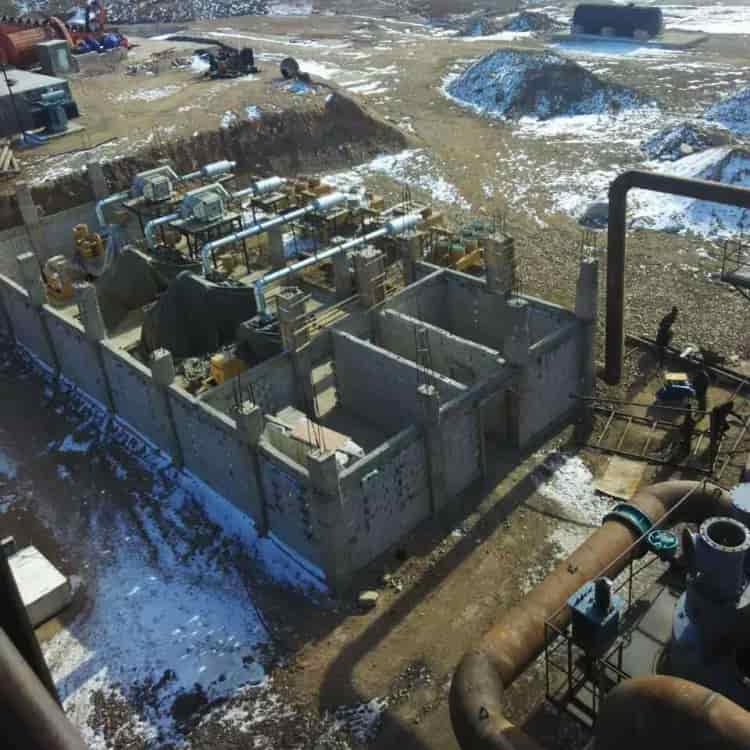
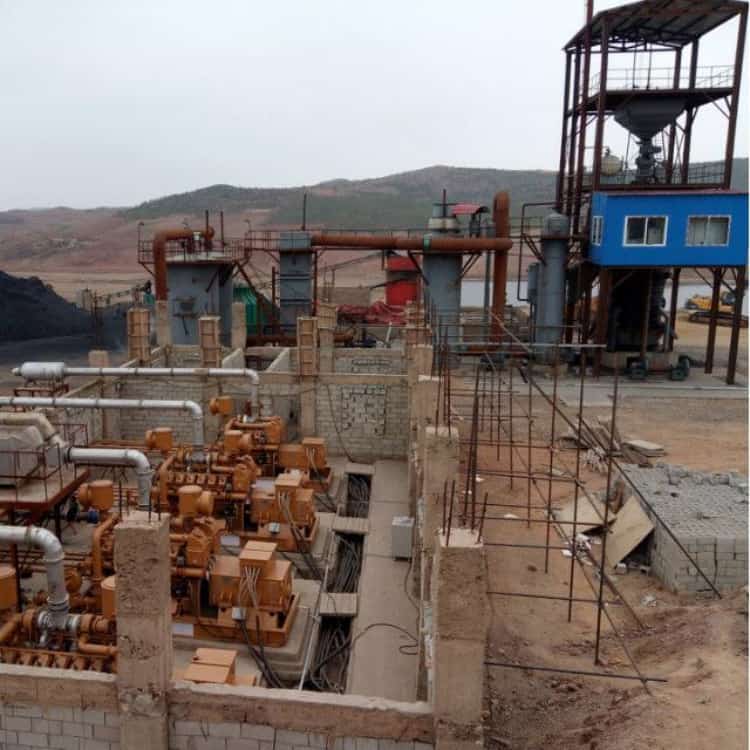
Technical characteristics of biomass gasifier:
1.Drying layer: The top layer of the gasifier is the drying zone, where the materials added from above directly enter the drying zone. The materials exchange heat with the hot gas products generated in the three reaction zones below, causing the moisture in the raw materials to evaporate. The temperature of this layer is 200-300 ℃. The products of the drying layer are dry materials and water vapor. Water vapor is discharged from the gasifier with the heat generated by the three reaction zones below, while the dry materials fall into the pyrolysis zone.
2.Pyrolysis layer: The biological dry material moves downward into the pyrolysis layer, and the biomass is heated at the same time. When the biomass is heated, a pyrolysis reaction occurs. Most of the volatile matter in the biomass is separated from the solid through the pyrolysis reaction, which is basically completed at 500-600°C, leaving charcoal. The main products of the pyrolysis zone are charcoal, hydrogen, water vapor, carbon monoxide, carbon dioxide, methane, tar and other hydrocarbon substances.
3.Oxidation zone: The remaining charcoal from pyrolysis reacts violently with the air, releasing a large amount of heat. Since it is oxygen-limited combustion, the oxygen supply is insufficient, so incomplete combustion reactions occur at the same time, generating carbon monoxide and also releasing heat. In the oxidation zone, the temperature can reach 1000°C.The reaction equation is:
C+O2=CO2+△H △H=408.8 kJ
The combustion reaction takes place in the oxidation zone and releases heat. It is this part of the reaction heat that provides the heat source for the reduction reaction, cracking and drying of materials in the reduction zone. The hot gas (carbon monoxide and carbon dioxide) generated in the oxidation zone enters the reduction zone of the gasifier, and the ash falls into the ash chamber at the bottom.
4.Reduction layer: There is no oxygen in the reduction zone. The carbon dioxide generated in the oxidation reaction reacts with carbon and water vapor to generate carbon monoxide (CO) and hydrogen (H2).Due to the endothermic nature of the reduction reaction, the temperature in the reduction zone also decreases accordingly, around 600-800 ℃. The main products in the reduction zone are carbon monoxide (CO), carbon dioxide (CO2), and hydrogen (H2).
Gasification actually always involves the drying and cracking process of fuel. In the actual operation process, the four areas mentioned above do not have clear boundaries and are interpenetrating and intersecting with each other. Therefore, at the outlet of the gasifier, the output gas components are mainly carbon monoxide (CO), carbon dioxide (CO2), hydrogen (H2), and methane (CH4).
Purification treatment of biomass gas:
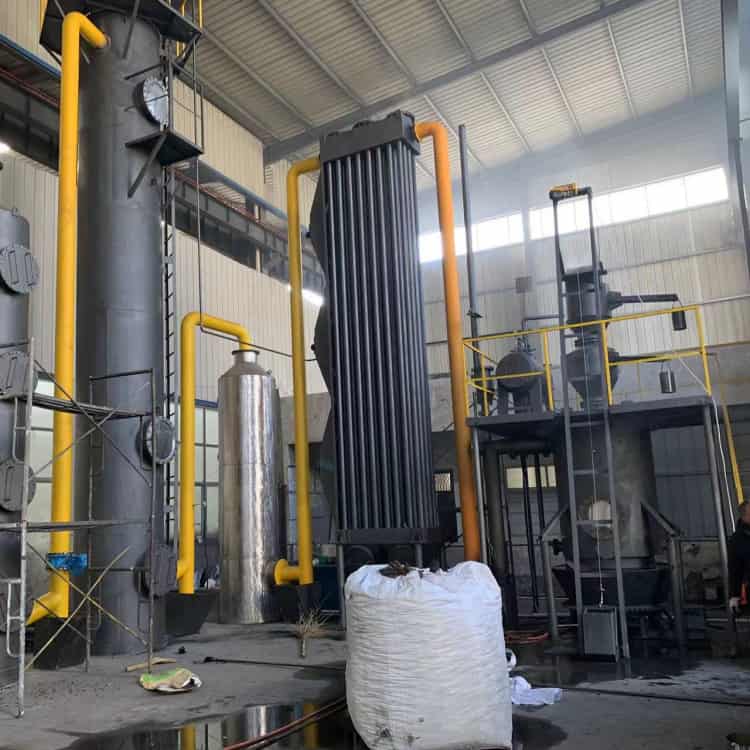
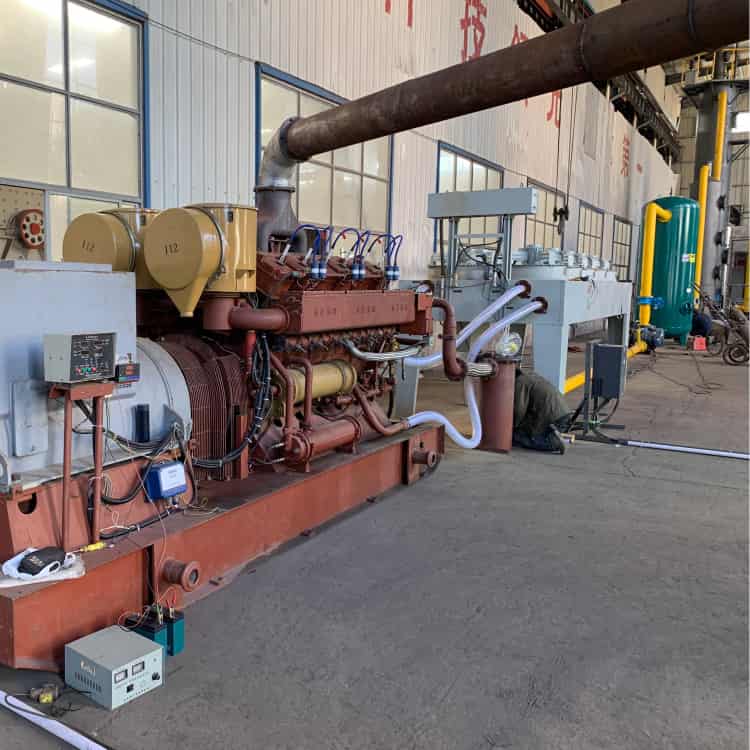
The crude hot gas generated by the biomass gasifier (with a temperature of 200-300 ℃) first enters the double vertical tube washing tower and is cooled and washed by circulating water.Part of the dust in the biomass gas is discharged from the sewage outlet at the bottom of the double vertical pipe with the circulating water.After being washed and cooled by the double vertical tube, the temperature of the biomass gas is about 100 ℃, and it enters the multi-stage washing tower for further cooling, washing and dust removal. The temperature of the biomass gas is cooled to 30-45 ℃, and the dust content at the outlet is generally less than 50mg/Nm3.After passing through the isolation water seal, it enters the electric tar collector for further de-oiling and dust removal. The total content of tar and dust in the biomass gas is within 80mg/Nm3.It is pressurized to 8-15kPa (can also be adjusted according to the user) by the biomass gas compressor, and then the water is captured by the drip catcher.So far, the biomass gas that has undergone multi-stage dust removal, decoking, and cooling is supplied to the generator set through the pipeline under the pressure of the Roots blower.
Process characteristics:
The biomass gas power generation process is specially designed by Henan Hejia Company for gas-fired power generation units. Its prominent feature is that the biomass gas is cooled, washed and purified multiple times before being de oiled and dust removed, so that the various indicators of the biomass gas can meet the requirements of the power generation unit.
Overview of Purification Equipment:
Double vertical tube washing tower:
The main function of the double vertical tube washing tower is to purify and cool the biomass gas produced by the gasifier.
Multi-stage spray scrubber:
The main function of a multi-stage spray scrubber is to further cool biomass gas and also serve as a dust collector.
Electric tar collector:
The main function of an electric tar collector is to remove oil and dust from biomass gas, which can remove 95% to 98% of tar and dust.
Drip catcher:
The main function of the drip catcher is to catch the moisture in the purified biomass gas.
Purified biomass gas indicators (taking wood chips as an example):
CO 20.2%
CO2 9.15%
H2 13.48%
CH4 3.95%
O2 1.2%
N2 52.02%
Applicable raw materials: